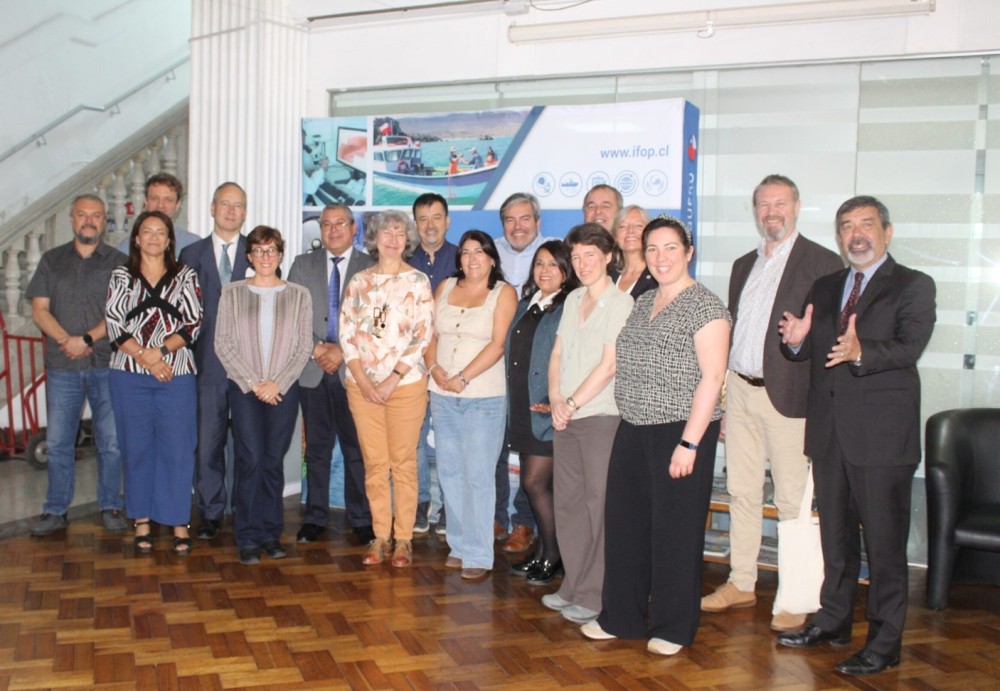
From 9 to 13 March 2026, a delegation from the Flanders Marine Institute (VLIZ) conducted an extensive institutional visit to Chile. Building on a long-standing collaboration with Chilean partners, the mission marked a significant step in reinforcing VLIZ’s international engagement in leading ocean research. With visits to six locations, meetings with fourteen institutions and the signing of three memoranda of understanding, the visit laid a solid foundation for future joint initiatives.
Clear objectives and strategic alignment
The mission was driven by clear objectives: to revisit and strengthen existing partnerships while developing new collaborations, and to explore opportunities for joint research and knowledge exchange. A key focus was also placed on mapping available infrastructure, expertise and data, and defining concrete actions for the short and medium term.
This visit aligns closely with VLIZ’s strategic priorities, particularly in terms of internationalisation, strengthening research capacity and delivering societal impact through ocean solutions. Through engagement with more than 70 Chilean researchers and experts, a shared understanding of priorities, challenges and complementary expertise was established, forming a strong basis for sustained collaboration.
Strategic themes shaping future collaboration
Several key themes emerged during the mission, defining the direction of future cooperation.
1. Ocean observation and monitoring
Both partners identified strong opportunities in the development of innovative and cost-effective observation systems, including ferrybox technologies and advanced sensors for climate and carbon monitoring. Collaboration on sea level monitoring and tsunami warning systems also offers significant regional impact potential in the South-East Pacific.
2. Marine data and digital infrastructure
A central pillar of cooperation is the improved accessibility and integration of high-quality Chilean datasets. Initiatives such as the development of a Chilean Register of Marine Species and integration into global platforms like OBIS and WoRMS highlight the importance of FAIR data principles. VLIZ’s expertise in data management and interoperability plays a key enabling role.
3. Climate and carbon systems
Joint work on ocean carbon observations, particularly in complex fjord systems, presents opportunities to address critical knowledge gaps. The use of artificial intelligence and advanced sensor technologies will support a better understanding of ecosystem dynamics and carbon fluxes.
4. Modelling and forecasting
From food web modelling to forecasting harmful algal blooms and microplastic dispersion, modelling is a key component of the collaboration. Combining Chilean datasets with VLIZ expertise enables improved ecosystem assessments and supports evidence-based decision-making.
5. Science-policy interface and co-creation
The mission highlighted the importance of linking science to policy and practice, particularly in the context of international frameworks and sustainable aquaculture. Initiatives such as “Co-management 2030” illustrate how science, policy and local communities can co-design innovative governance approaches.
Concrete opportunities and forward-looking impact
The visit resulted in a range of tangible opportunities. In the short term, joint project proposals are being prepared, technical workshops are planned, and researcher exchanges will be initiated. Collaborative field campaigns and training activities in data management and technology are also being developed.
In the medium term, efforts will focus on developing shared infrastructure, including sensor networks and data platforms, as well as launching joint research programmes on topics such as microplastics, environmental DNA (eDNA) and biogeochemical modelling.
Looking further ahead, VLIZ and its partners aim to integrate Chilean datasets into global systems, develop innovative observation methods, and scale up collaboration at a broader regional level across Latin America.
A strategic step forward
This mission confirms Chile as a key partner for VLIZ in the Southern Hemisphere. By combining scientific excellence with strategic cooperation and societal relevance, VLIZ further strengthens its position within the global marine research landscape. The foundations have been laid; now the focus shifts to delivering impactful ocean solutions together.