The Sea as a Good Cause – VLIZ's charitable initiative – awards the Brilliant Marine Research Idea (BMRI) grants annually, valued at 5,000 euros each. In 2026 Frederik Van Daele (UGent) and Sofia Knoch (UGent) receive an extra incentive for their marine research through this funding. The BMRI grants can only be realized financially thanks to donations, VLIZ membership contributions, and sponsorships. They were awarded their prize at the VLIZ Marine Science Day on March 4, 2026.
The aim of the BMRI grants is to inspire and support PhD students and young postdocs to further develop a 'brilliant research idea' within the scope of their marine research. The BMRI grants are unique in Flanders and stand out from other funding programs due to their focus on out-of-the-box thinking.
The Sea as a Good Cause is recognized as a Grant Making Facility for the UN Ocean Decade. The Brilliant Marine Research Idea grants are awarded within this framework, meaning that the research conducted by these young marine scientists directly contributes to the scientific development of the Ocean Decade.
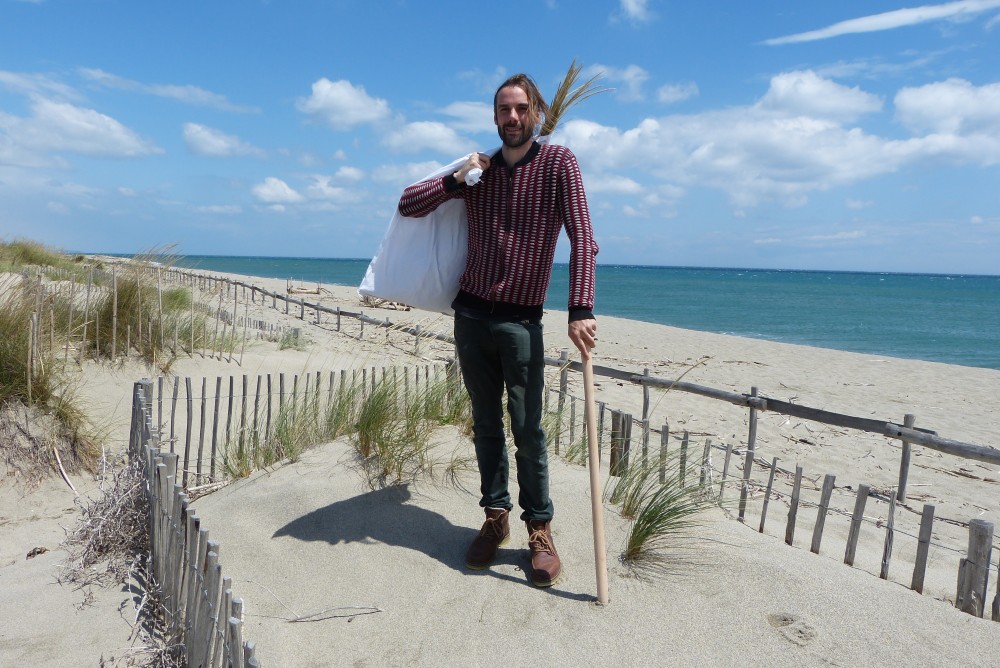
Rooting for Resilience: Pioneering a low-cost in-situ monitoring network for dune-building engineers
We often look at the dunes, but rarely into them. Yet, the 'hidden half' of marram grass (Ammophila arenaria) determines the true power of our coastal protection: roots anchor the sand and drive the natural self-repairing capacity of dunes after storm damage. Frederik wants to understand these underlying dynamics.
Thanks to the BMRI grant, he will be able to look literally beneath the surface using an innovative network of affordable, low-cost root scanners (minirhizotrons). This enables him to monitor root growth 'live' and non-destructively, from controlled experiments to real dunes along the entire European coast. These unique insights into erosion resilience provide crucial data for future coastal digital twins (DuneFront & Living Coast) and for sustainable coastal restoration.
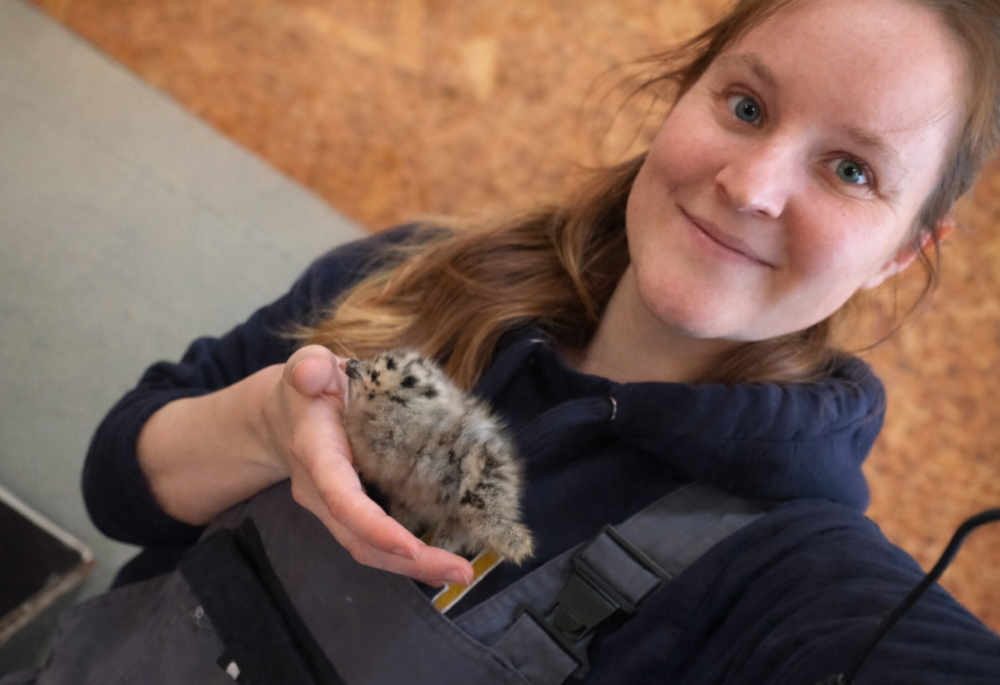
Early struggles, lasting marks? How early life adversities shape telomere dynamics in herring gulls
Coastal ecosystems are being rapidly transformed by human activities, with consequences for food-web structure and the nutritional environments experienced by wildlife. In long-lived seabirds, diet is a key pathway through which environmental change affects physiological and behavioural development. Ocean warming has reduced the availability of essential omega-3 fatty acids, while increased urbanisation shifts food sources toward higher omega-6:omega-3 ratios and introduces contaminants such as mercury. Because seabirds are oviparous, these diet- and contaminant-related differences are transferred directly to offspring via the egg, exposing embryos to different nutritional and toxicological conditions. In herring gulls, variation in maternal foraging strategy therefore creates a gradient of early-life adversities.
With the support of the BMRI grant, Sophia will use telomeres (i.e. DNA-protein structures that shorten in response to stress) as biomarkers to assess how early-life adversities shape early physiological resilience. Specifically, Sophia will test whether variation in the prenatal environment, quantified through maternal diet, yolk fatty-acid composition, and feather mercury concentrations, predicts baseline telomere length and telomere shortening during early development. By linking maternal foraging ecology to molecular markers of early-life stress, this work will help clarify how human-driven changes in coastal ecosystems influence developmental trajectories and physiological resilience in wild seabirds.
Support or Win a BMRI Grant?
Is your company interested in sponsoring a BMRI grant? Please contact our philanthropy team.
As an individual, you can also donate to support more marine research through the BMRI grants.
Would you like to apply for a BMRI grant as a doctoral candidate or young postdoc? We will launch a new call for applications on the VLIZ website this fall.