The latest publication from the European Marine Board takes a clear stance on the potential of today’s ocean-based approaches for extracting CO₂ from the atmosphere — known as marine Carbon Dioxide Removal (mCDR). An analysis of the most prominent ocean-based methods shows that none of them currently provide a viable alternative to cutting emissions at the source. Rapid reduction of CO₂ emissions must remain the key focus. For now, these techniques can only play a supporting role in reaching net-zero emissions. The report highlights the scientific, technical and regulatory hurdles involved. Dr. Peter Landschützer, research director at VLIZ, was part of the international team of leading scientists behind the publication.
A wide range of Carbon Dioxide Removal (CDR) methods – including those intended for marine environments – is currently being explored and tested. These approaches aim to address residual CO₂ emissions and remove ‘historical’ carbon from the atmosphere once greenhouse gas emissions have been substantially reduced. They may also contribute to achieving the climate goals of the Paris Agreement.
The State of Carbon Dioxide Removal‑rapport estimated that marine CDR methods currently account for less than 0.1% of global CO₂ removal efforts. At the same time, the diversity of techniques is rapidly expanding – each with potentially significant effects on the marine environment.
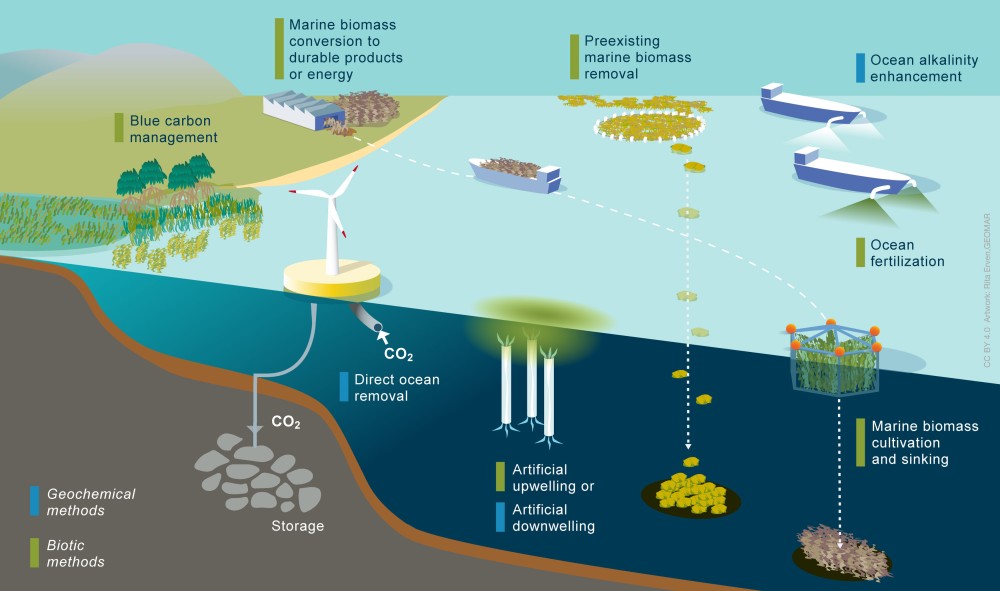
Schematic overview of marine carbon dioxide removal (mCDR) methods included in this Future Science Brief from the European Marine Board.
Recommendations for deployment
Monitoring, Reporting and Verification (MRV) is a structured process for collecting, disclosing and independently validating data on CDR activities. It includes quantifying how much CO₂ a technique removes, assessing the durability of storage, and evaluating uncertainties and environmental impacts. The need for scientifically sound European guidelines is therefore pressing, in order to develop robust, transparent and evidence-based MRV frameworks for mCDR.
An international working group of 13 researchers – led by Dr. Helene Muri (NILU/NTNU, Norway) and Dr. Olivier Sulpis (CEREGE, France), with Peter Landschützer (VLIZ) as co-author – presented its findings during a webinar on 17 November 2025. The Future Science Brief #13 'Monitoring, Reporting and Verification for marine Carbon Dioxide Removal' highlights the research gaps that pose major challenges for the practical implementation and effectiveness of mCDR in the ocean, including uncertainties related to key processes, environmental impacts and the long-term stability of carbon storage.
“No mCDR method currently has a sufficiently robust and comprehensive MRV system,” says Helene Muri. “This means that efficient and safe application of mCDR methods cannot be guaranteed at this time.”
The working group stresses that investing in science and innovation — in ocean observing systems, modelling and infrastructure — is crucial for building MRV capacity. “If we want to seriously consider the use of mCDR in the future, we need to invest now in the knowledge base required for MRV,” says Muri.
The researchers also call for the development of strong governance to support MRV for mCDR. “We currently lack dedicated governance frameworks for MRV related to mCDR,” Muri notes. A comprehensive regulatory framework is needed to overcome the fragmentation, inconsistencies and lack of global coverage found in existing MRV systems.