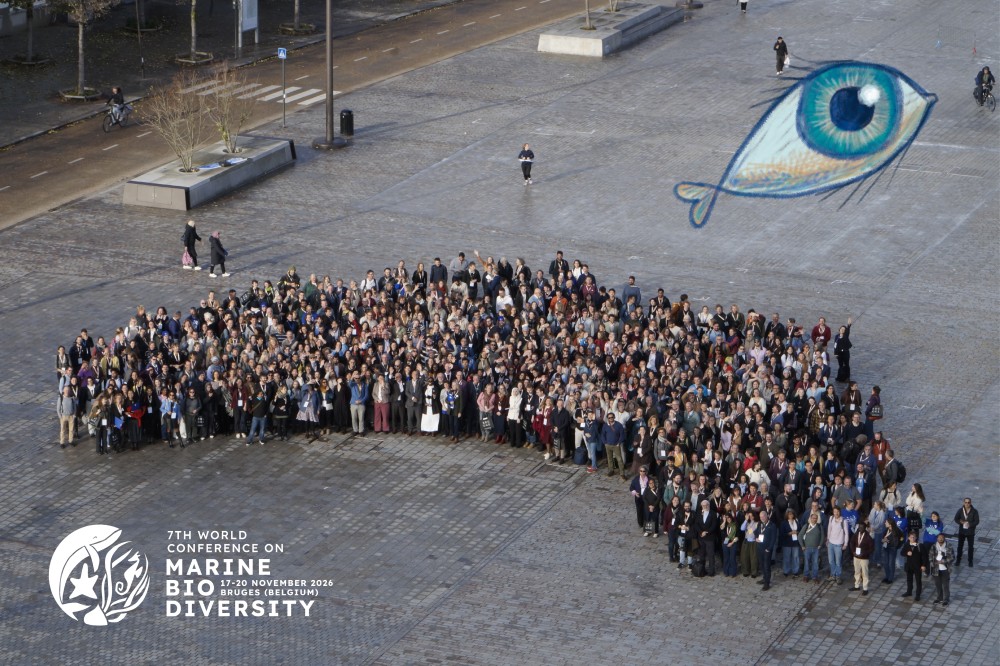
From 17 to 20 November, Concertgebouw Brugge became a meeting place for the international marine biodiversity community. Organised by VLIZ, the seventh World Conference on Marine Biodiversity brought together 840 participants from 68 countries. Over four days, they shared discoveries, discussed challenges and explored how scientific knowledge can support the protection of ocean life.
Jan Mees, General Director of VLIZ, and Enrique Montes of the International Association for Biological Oceanography (IABO) opened the conference. Keynote speakers David Obura and Vidar Helgesen set the tone: how can biodiversity research support sustainability, and how do we turn knowledge into action? These questions ran through the presentations, poster sessions and conversations throughout the week.
From deep-sea expeditions to a digital ocean
Eight keynotes offered different perspectives on marine biodiversity. Daniel Lauretta showed how live-streaming a deep-sea expedition can bring science to a wide audience. Katherine Tattersall highlighted the importance of globally accessible ocean data. Leen Vandepitte explored the history, challenges and future of marine taxonomy, while Philippe Bouchet drew attention to the extraordinary diversity of small and rare species. Even after describing 700 new species, his curiosity remains undiminished.
On the final day, Fei Chai examined how a digital representation of the ocean could help close knowledge gaps. His observation that modelling life in the sea is still in its infancy underlined how much remains to be done. Lisa Levin placed the current state of marine biodiversity in the context of historical baselines, trends and possible futures.
Parallel sessions covered species discovery, citizen science, restoration, genetic monitoring, animal tracking and the effects of human activities. Many VLIZ colleagues presented their work. An entire session was dedicated to the World Register of Marine Species (WoRMS), while other contributions explored how plankton research, shared data and digital twins can improve our understanding of marine ecosystems.
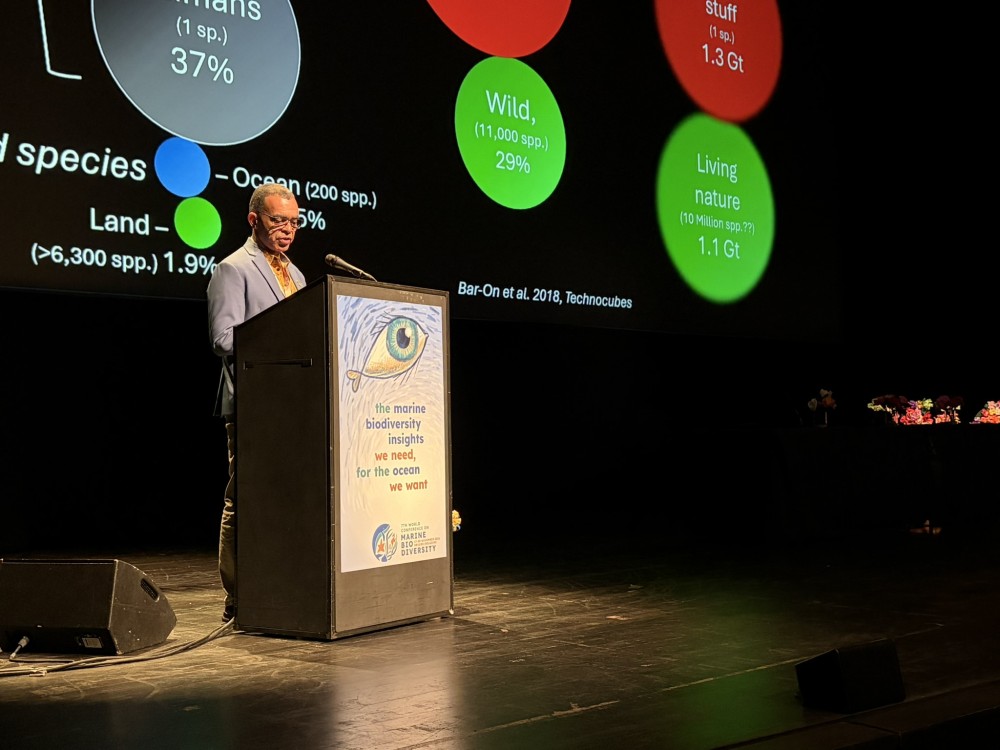
Keynote speaker David Obura draws lessons from coral reef research: how can science help shape a sustainable future?
Recognition, connections and a journey beneath the surface
A particular highlight was the presentation of the International Carlo Heip Award to Philippe Bouchet, recognising his leadership in marine biodiversity science. A reception at Bruges City Hall, attended by Carlo Heip’s children, added a personal dimension to the occasion.
The wider public also joined the conference for a screening of How Deep Is Your Love. Introduced by Jan Mees and deep-sea ecologist Ellen Pape, the documentary took a full house on a journey into the deep ocean. Photography exhibitions from BLUE4ALL and the International Seabed Authority complemented the evening.
Between presentations, participants made connections over posters, exhibition stands and coffee. The conference dinner at the Belgium Pier in Blankenberge offered another opportunity to catch up, while handmade paper beach flowers brought a little Belgian seaside tradition to Bruges.
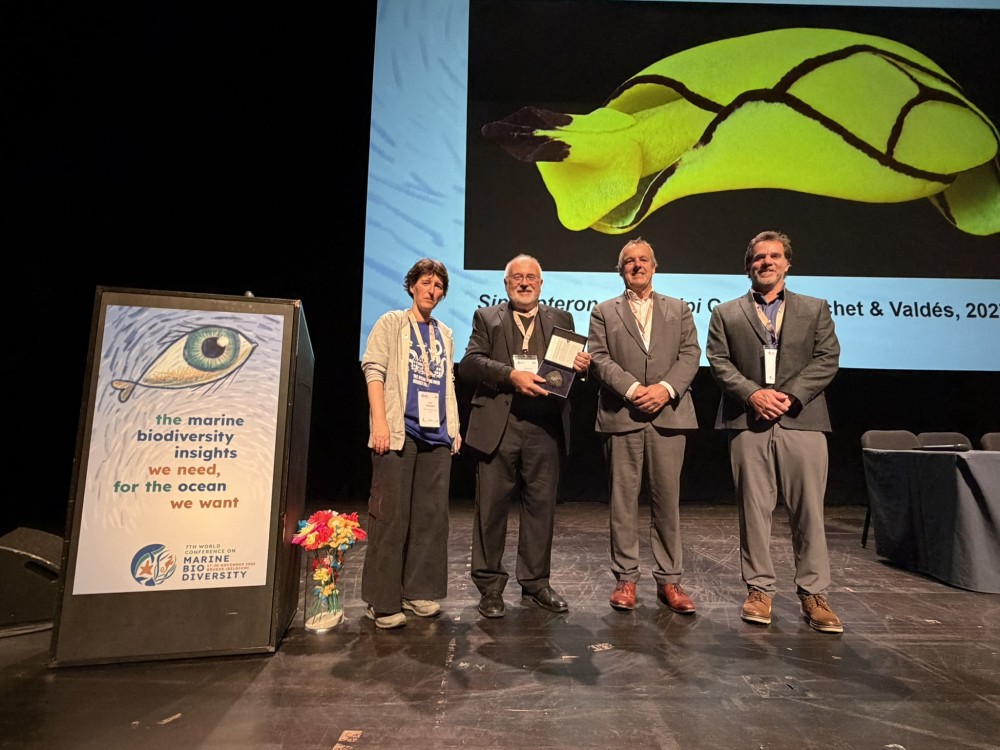
Philippe Bouchet receives the Carlo Heip Award in recognition of his leadership in marine biodiversity science. From left to right: Leen Vandepitte (VLIZ, WoRMS), Philippe Bouchet, Jan Mees (VLIZ) and Enrique Montes (IABO).
An outcome extending beyond the conference
Throughout the week, the Blueprint Connectors collected 183 candidate solutions for the Ocean Life Blueprint. Four main themes emerged: smarter monitoring and more usable data; effective protection and restoration; reducing human pressures; and mobilising finance, capacity and knowledge for action.
WCMB2026 closed with thanks to the participants, partners, sponsors and colleagues who made it possible. New connections, practical ideas and the opening of bids to host WCMB2029 gave the week a forward-looking conclusion. For four days, our small country made its mark on the international marine biodiversity research community.
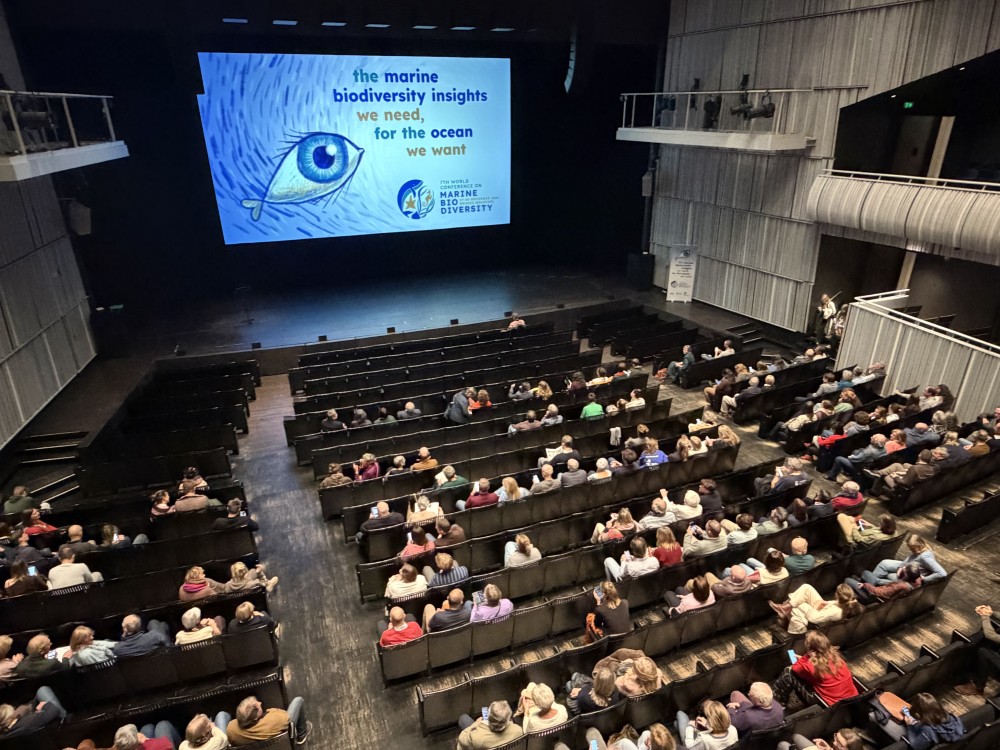
For four days, biodiversity researchers from around the world gathered in Bruges.